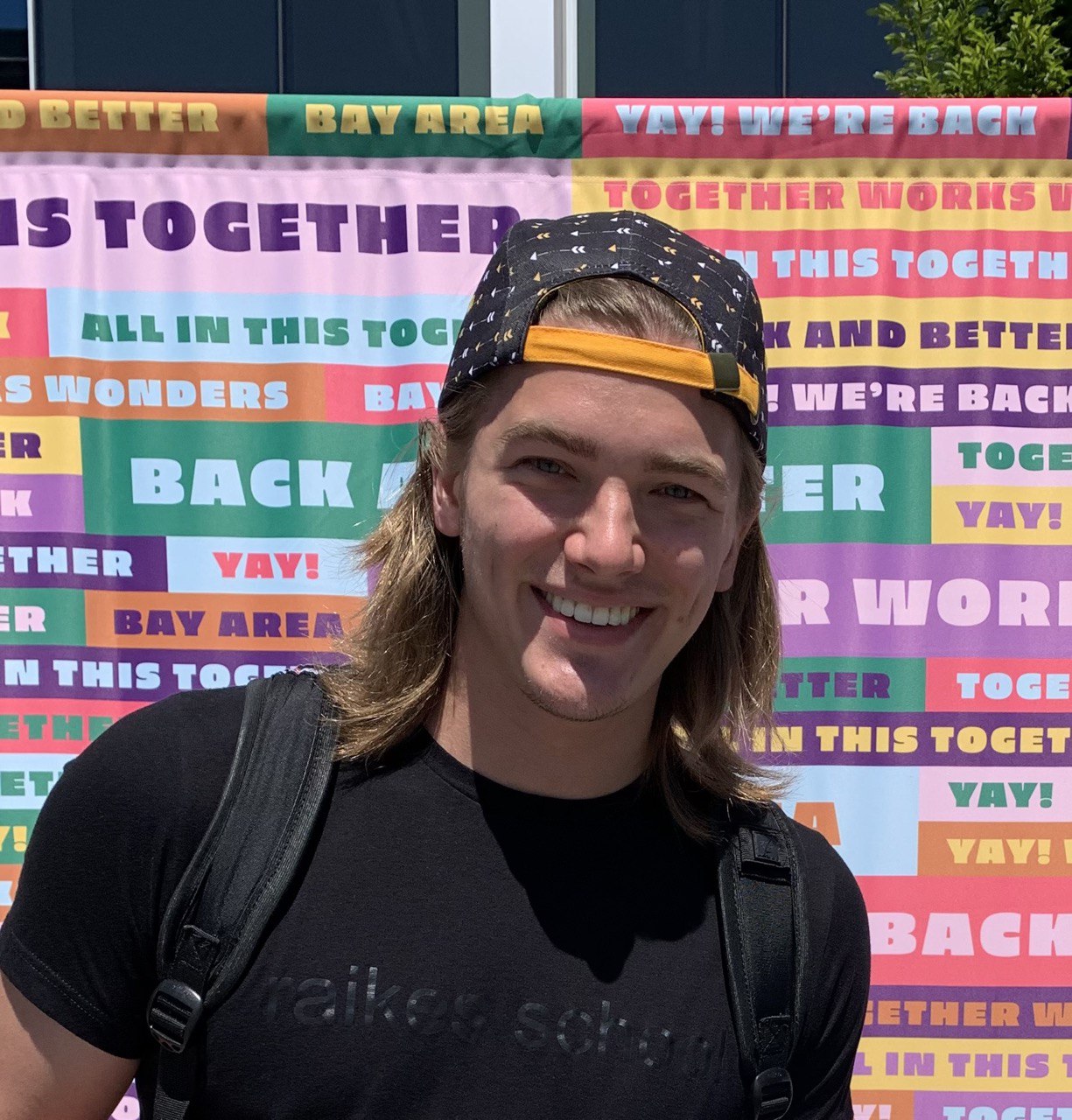
I'm Liam, a Software Engineer in the San Francisco Bay Area. I am a recent Computer Science and Mathematics graduate from the Raikes School of Computer Science and Management at the University of Nebraska-Lincoln.
I am passionate about many things, such as web development, game development, tournament system mathematics, and graphics programming. I made this website so you can get to know me better than a simple LinkedIn page, or one-page resume.
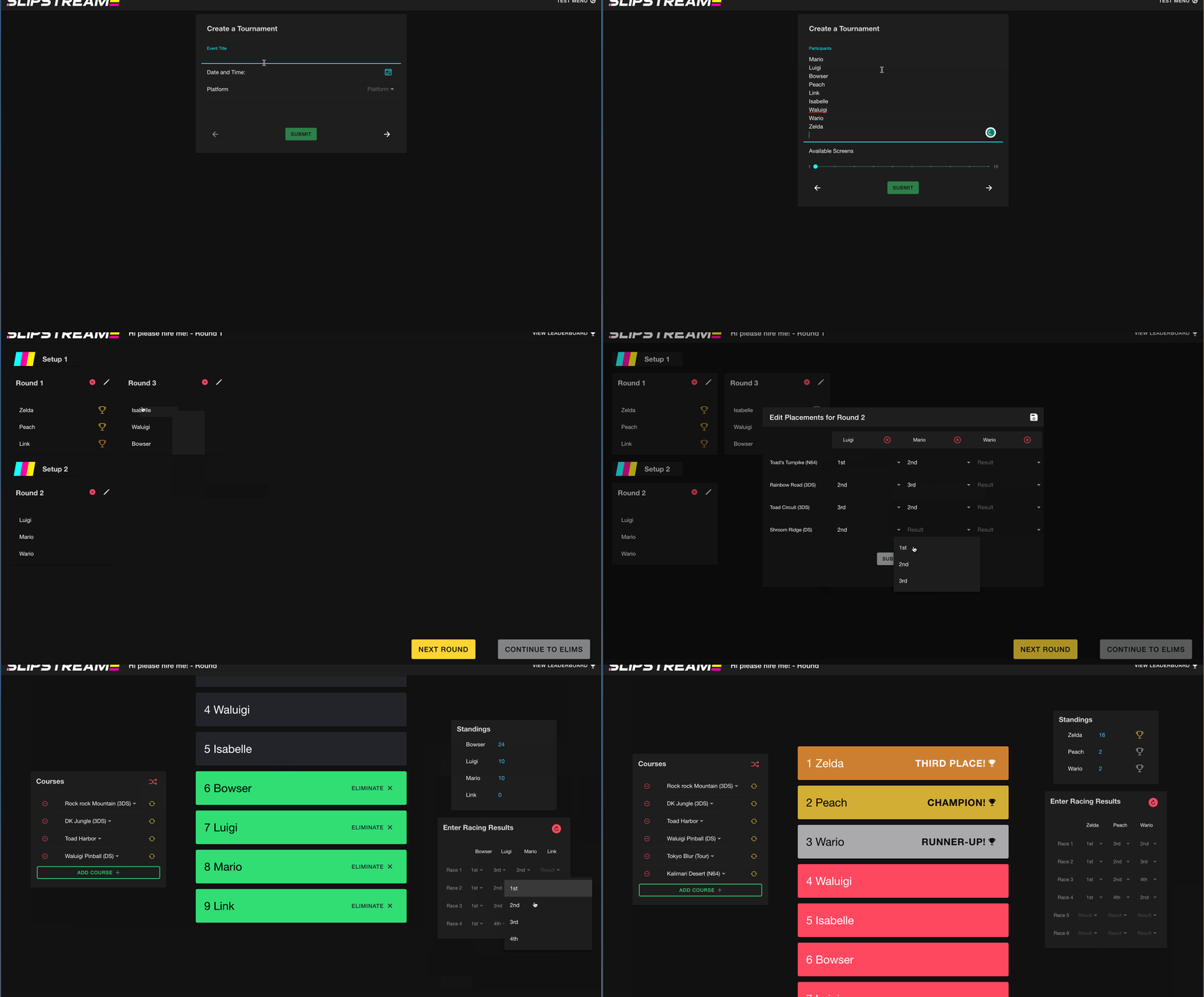
Slipstream is a tournament management solution for non-traditional tournament formats written in Typescript. Features full support for Mariokart 8 Deluxe and Mariokart Wii. Created originally for the UNL eSports Club and Mariokart community, and has been adopted at over 10 Midwestern Universities.
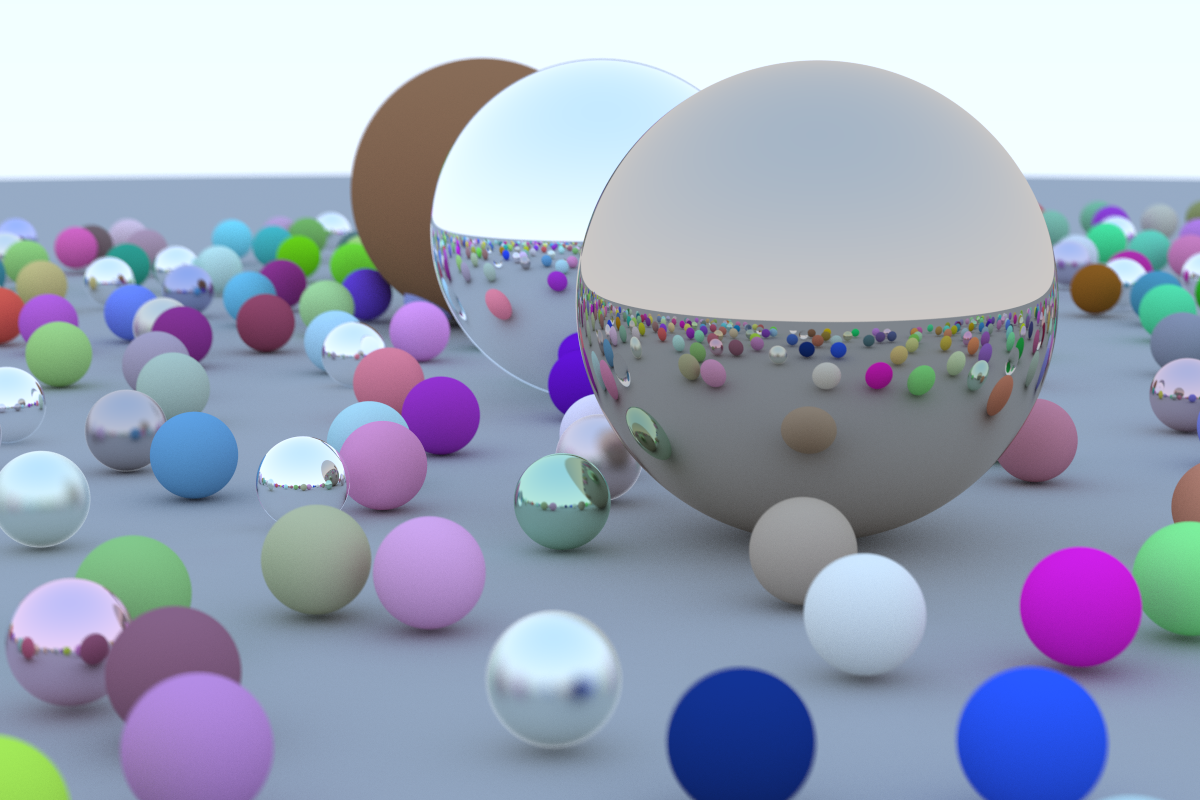
A multithreaded raytracer written from scratch in Rust. Supports camera movement, dynamic focal length, metallic, glass, and lambertian materials, and thread tailorability.
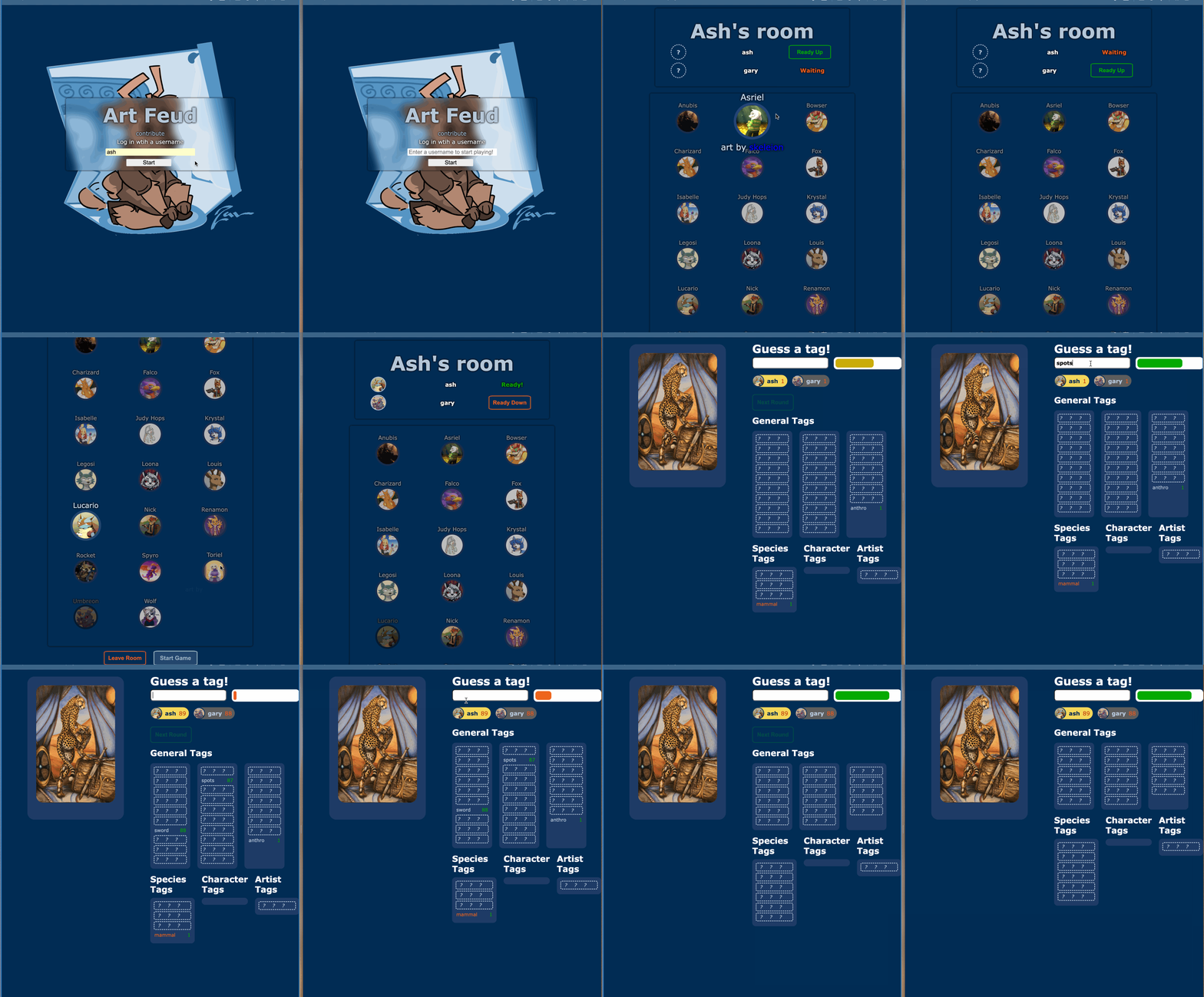
A web-based multiplayer game written in Typescript centered around guessing meta tags on digital art pieces faster than your opponents.

I'm the elected Executive Primary Programmer of UNL's School of Computing Student Advisory Board, where I am in charge of:
I've proposed and will be fascilitating the running of some first-time collaborative efforts with other clubs in the School of Computing, such as:
I am the Treasurer of the oSTEM Chapter at UNL, a club dedicated to the support and development of LGBTQ+ individuals within various fields of STEM. We hold meetings monthly, as well as careers fairs, fundraisers, and networking events. As treasurer, I am responsible for:
Club officers and selected members attend the annual oSTEM National Conference, in which oSTEM chapters from universities around the world attend the weekend-long conference. I attended the 2019 conference in Detroit, as well as the virtual ones in 2020 and 2021, and am going to attend the 2022 conference this year in Boston.
Kauffman Residents Association serves as a liason between UNL's Housing Staff and the students that live in the Kauffman Residence Hall. We help fascilitate residential events, such as game nights, study breaks, and career prep sessions.
As wing-representative, I've proposed and ran the following events:
FLUFF is a interest-based club that focuses on anthropormorphic media and content. We seek to promote activity, engagement, and content-creation within this diverse and creative community, as well as sharing information and news.
Sadly we were not able to hold any in-person meetings, as our RSO was just established right as the COVID-19 pandemic hit, but we plan to hold meetings as UNL moves back to in-person classes and permits RSOs to meet in-person once again.
The Game Development Club is an RSO dedicated to providing a community and space for students to develop video games of all shapes and sizes. From 4X to Visual Novel, various games of all genres are pitched, teams are formed, and development occurs throughout the year in small teams.
They also attend Game Jams, which are essentially hackathons dedicated to game-making. I was fortunate to attend the K-State Game Jam in January of 2020 with fellow members of the club. Our team won 3rd overall, and won the "Best AI" award as well.
Part of Cohort 2019, The Raikes School is a highly selective school within UNL that teaches an interdisciplinary program of computer science and business. It emphasizes project-based learning and hands-on experience with it's self-contained project based curriculum, as well as 2 full years of Design Studio for students to get cutting-edge industry experience 2 full years before graduating.
With two years of internship experience under my belt, I am eager to jump into Design Studio this semester, and am hoping to work on projects involving machine learning and generative, dynamic consumer-content.
I'm a part of UNL's own University-wide Honors Program is a highly selective school within UNL that teaches an interdisciplinary program of computer science and business. It emphasizes project-based learning and hands-on experience with it's self-contained project based curriculum, as well as 2 full years of Design Studio for students to get cutting-edge industry experience 2 full years before graduating.
With two years of internship experience under my belt, I am eager to jump into Design Studio this semester, and am hoping to work on projects involving machine learning and generative, dynamic consumer-content.
| Name | 2019 | 2020 | 2021 | 2022 |
|---|---|---|---|---|
| George Beadle |  |
|
|
|
| Husker Heritage | |
|
|
|
| Raikes | |
|
|
|
| Honors | |
|
|
|
| S&H Jeans | |
|
|
My friend Sam asked if I wanted to play Return of the Obra Dinn, a game I'd seen through my studies of graphics programming. I was initially excited by the art direction of the game, as the shader style seemed really cool. I really like the main game loop of discover -> deduce -> confirm. It also presents to you radically strange content at it's peak, and then gives you the buildup - an interesting turn on things.
I will say the game is EXTREMELY difficult. I much enjoy playing it around friends, as I don't know if I'd have the patience nor mental energy to juggle a lot of the small detective work to do it! It's a decent jump outside my comfort zone, but I'm glad I took it, as it's been very interesting.
I'll say one of my favorite things is the incredible sound design of the game. The beginning of the flashback scenes with the narration and text on a simple uniform color background is incredible. I can tell each and every audio track was crafted with utmost care, as hearing the muffled voices, creaky boards and swish and swash of the ocean really breathes life into the game.
6/1/2024, 11:28:00 PM
Mountain View, CA
I am currently a Software Engineer at Hudl, where I work on a small team that owns Hudl's Fan TV and mobile applications, as well as livestreaming functionality.
Working at Hudl has been incredible. Working on a brand new space that Hudl is entering with livestreaming and fan content, it has been phenomenal having the freedom to build out a new product from the ground up. I've been able to work on a variety of projects, from building out livestreaming controls, juggling user authentication across a variety of platforms, and implementing a custom focus management framework for TV apps. I am the lead engineer on development and maintenance for the Hudl Fan TV app, which shipped to the Apple and Google Play stores in early July.
Additionally, I am involved in user testing via:
I was a Software Engineer on the Palantir Gotham Eco UX team, which involved writing code for the improving and maintaining the core Palantir Gotham desktop application
I enjoyed my time working at Palantir, and was able to work on quite literally mission-critical software. I've been exposed to the interesting standards and challenges that writing and maintaining a one-stop-shop application for the U.S. Military entails, and seeing the engineering behind extremely strict data privacy rules has been fascinating. However I didn't morally align with the ethics of the company, and decided to pursue opportunities elsewhere.
Additionally, I ran user tests on these features via:
I worked as a SWE intern on the Facebook Marketplace team, and collaborated on projects with engineers on the Facebook Product Taxonomy team. I was responsible for implementing full-stack the filters used when a user searches in Facebook Marketplace, as well as on-scroll filter suggestions in the search results feed. I worked primarily with React Native for the frontend, and Hack (an in-house flavor of PHP) for the backend.
I absolutely loved my time working at Meta, and was able to push code that billions of users would see. I learned a lot about the challenges of writing code for the massive scale that facebook operates, as well as balancing development speed with ensuring user satisfaction. Diving deep into the massive codebase that Meta operates in was a very rewarding opportunity, and taught me a lot about collaborating with other engineers, and communicating and outlining requirements.
On the client-side, my work involved writing:
On the backend, my work involved writing:
Additionally, I ran user tests on these features via:
I worked as a Software Engineering Intern on the Software Automation Team of First National Bank of Omaha. I work primarily in scaled integration testing for services that FNBO provides (sorry, but I can't exactly name which ones!). I also did some front-end work in React.
I primarily used Java with Selenium, with additional scripting done in Python. For front-end, we used primarily React. This work has been extremely rewarding and given me an appreciation for the craft of testing software and how it is just as important, if not more, to write good, reliable, sustainable, and efficient tests, especially when working with financial software this important to everyday life.
While it may not be as important as the lines of code aboard the ISS, it has been a tremendous experience writing software for a service that is as crucial as FNBO's, and I hope to incorporate my newfound knowledge of testing automation into future and existing passion projects of mine.

At Ameritas I worked as part of the Data Analytics & Insights Team. It was a fantastic opportunity for me to apply my passion for data science to important, real-world datasets. It also taught me that visualizing and communicating results is just as, if not more important than the actual data exploration and analysis.
I was a TA for CSCE 156 first semester of my Sophomore year at UNL, which is the second core CS course most CS students take at UNL. I loved being a TA, as it helped reaffirm my belief that truly anyone of any skill level or background can learn CS if they have the right drive and teacher.
It was also a fantastic opportunity to talk individually with professors within the CSCE Department at UNL, and learn more about the amazing research they are doing (I'm hoping to find the time to do some this next semester!).
This next semester, I will be a TA for the Raikes-specific second-year class RAIK 283H, better known as Software Engineering III. The class is focused around algorithm analysis, and teaches it in a very intuitive project-based path instead of the traditional lecture-lab format. This was one of my favorite courses in college thus far, so I'm very excited to TA for it!
My first internship was as a Software Engineering Intern at Flywheel, a premium WordPress Hosting company based in Omaha.
I had barely gotten my feet wet with web developlment by the start of my internship, and thus learned a TON about web applications and how you can quite literally put anything online. It was what really ignited my passion for web development, and gave me a great introduction to working in an agile tech startup.
It was actually beneficial with my internship being remote, as I was able to be both a member of a standard development, specifically on the team that built and maintained the customer support dashboard and admin tools. I was able to dive headfirst into both frontend and backend development, completing tickets for both on our Jira board.
My other team was a summer-long intern project, which involved incorporating the Divi WordPress theme into Flywheel's site spinup process. It was the first time Flywheel had partnered with a WordPress theme company, and was quite the project for interns to take on! I was the lead engineer on the team, and I gained tremendous leadership and development experience by fully integrating into every part of the projects process, from initial conception and prototyping to the final touches and handoff.
Code Hero Academy was born out of a frustration for a lack of computer science education within my hometown's education system. Ever since I was in middle school, computers fascinated me and I was eager to learn more about them, but aside from the occasional trip to the media center to print something, our system had next to no educational resources for students like me.
I took matters into my own hands, buying a cheap $200 laptop to dive into programming myself. After a couple years of working landscaping jobs around my neighborhood in the Spring, Summer, and Fall, I had saved up enough money to build my own desktop. It was here that I really dove headfirst into coding with various projects, including a (terrible) Terraria clone.
The summer going into my Senior year I was looking for a chance to put my budding programming skills to use. It was here I met Venkateswara and Naga Kakula, two people who shared my frustrations with the lack of CS opportunity in my hometown. We founded Code Hero Academy together to fix this.
Using a project-based learning system, as opposed to the classroom-style method of teaching that was the norm for other learning academies, we were able to not only teach students concepts quicker, but get them actually excited about learning. From building their own Amazon Alexa with a Raspberry Pi, to making a Fortnite Clone in Unity, it was amazing what these students could do when given the opportunity.
Being the first learning academy in our area focused on computer science, we attracted the attention of my district's rotary, as well as our US House Representative, Angie Craig! I got to personally talk with her about the issues with a lack of curriculum concerning computer programming in both middle and high school.